


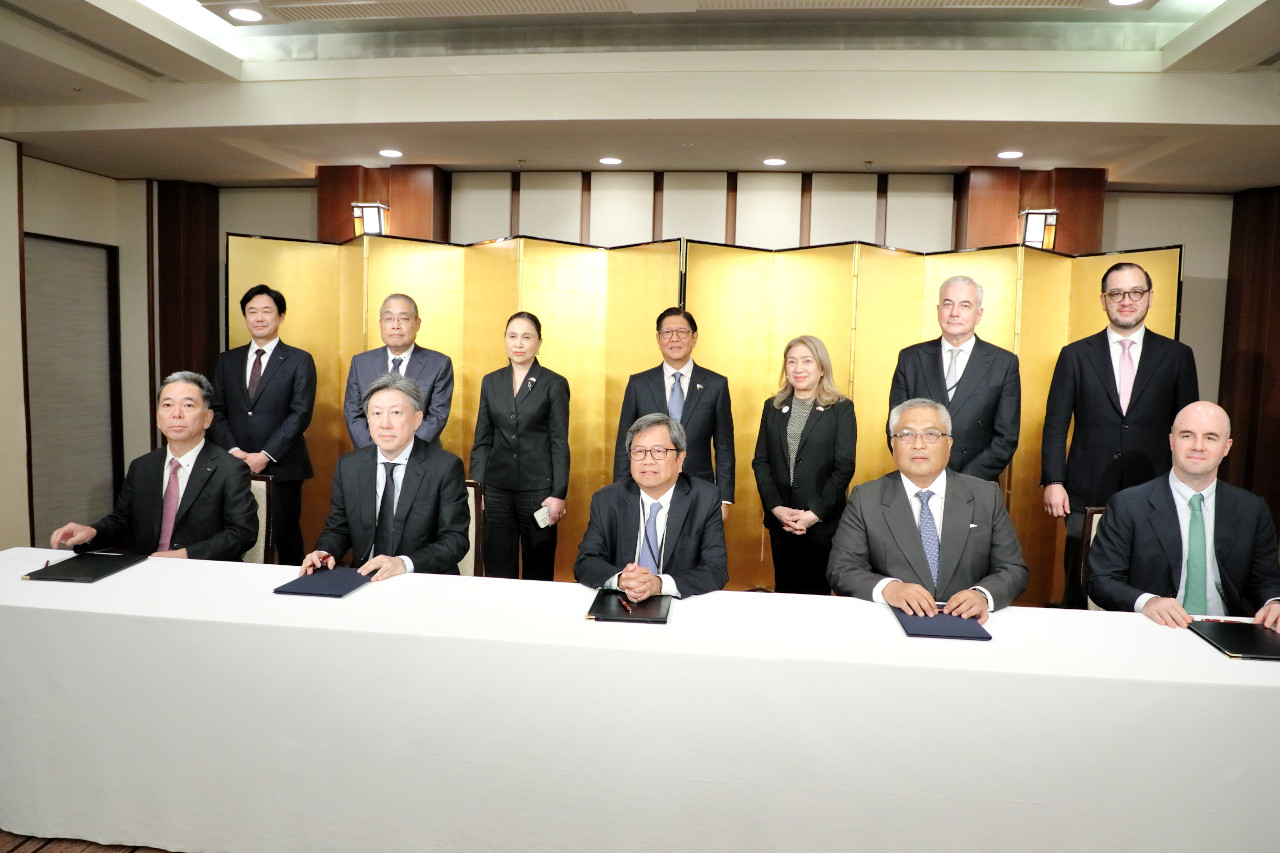
- Ayala, Globe, Mitsubishi, and KDDI signed an MOU in Tokyo — witnessed by President Marcos — to build the Philippines’ first “intelligent city,” with Makati’s central business district as the pilot.
- The plan is an AI- and IoT-driven urban platform spanning mobility, retail, energy, and connectivity, with Globe’s network as the backbone.
- It’s one of three Ayala–Japan agreements signed on the trip (the other two cover GCash and digital finance), which the DTI estimates at roughly Php 7 billion in revenue. The build timeline wasn’t disclosed.
Ayala Corporation is teaming up with Globe Telecom and Japanese conglomerates Mitsubishi Corporation and KDDI to build what they’re calling the Philippines’ first “intelligent city,” and they’ve already named the pilot: Makati’s central business district. The four signed a memorandum of understanding in Tokyo on May 28, witnessed by President Ferdinand Marcos Jr. during his state visit to Japan.
According to the announcement, the partners will explore “data-driven urban platforms” built on artificial intelligence, the Internet of Things, and advanced connectivity, with Globe’s network as the backbone. The stated aim is to improve quality of life, business productivity, and “sustainable growth” across mobility, retail, energy, and infrastructure — and to build platforms that pool city data and run AI on top of it. “We are reimagining Makati CBD as a hub of innovation,” said Ayala president and CEO Cezar Consing, describing the goal as a city “that truly serves its people.” Makati is the starting point, with the partners flagging possible expansion to other urban centers later.
The intelligent-city deal is one of three the Ayala Group signed with Japanese partners on the trip. The other two center on GCash: its parent company, Mynt, signed agreements with Mitsubishi and MUFG to expand digital financial services and, as Mynt CEO Martha Sazon put it, take “Philippine fintech to the global stage.” The Department of Trade and Industry estimates the three agreements together could generate around Php 7 billion in revenue.
What hasn’t been set is the timeline. There’s no public schedule yet for when Makati residents or businesses would actually see any of this, and the investment isn’t broken out across the three deals.
For now this is an MOU — an agreement to explore, not a contract to build — so the thing we’d watch is whether “intelligent city” turns into deployed infrastructure or stays a collection of pilots. The choice of Makati CBD as the starting line is its own signal: the country’s densest, highest-value business district gets first crack at the upgrade.
